IMI Games
Worked extensively on the development and maintenance of the IMI Games Platform — a large-scale hyper-casual gaming ecosystem containing more than 80+ browser-based games available through the IMI digital entertainment platform. My primary responsibility was to modernize, optimize, and standardize the game architecture across the platform by engineering a new, reusable game template that enabled older pre-developed titles to become compatible with updated versions of PixiJS, modern APIs, and evolving platform requirements.
A significant portion of the work involved refactoring legacy game codebases, resolving long-standing technical issues, improving gameplay stability, and optimizing overall performance for smoother cross-platform experiences. I worked directly on integrating updated API systems, fixing gameplay logic inconsistencies, improving rendering and asset handling, and ensuring each title functioned reliably across modern web environments. The new template architecture streamlined the migration process for multiple games, reducing compatibility issues while creating a more scalable workflow for future game deployments and updates.
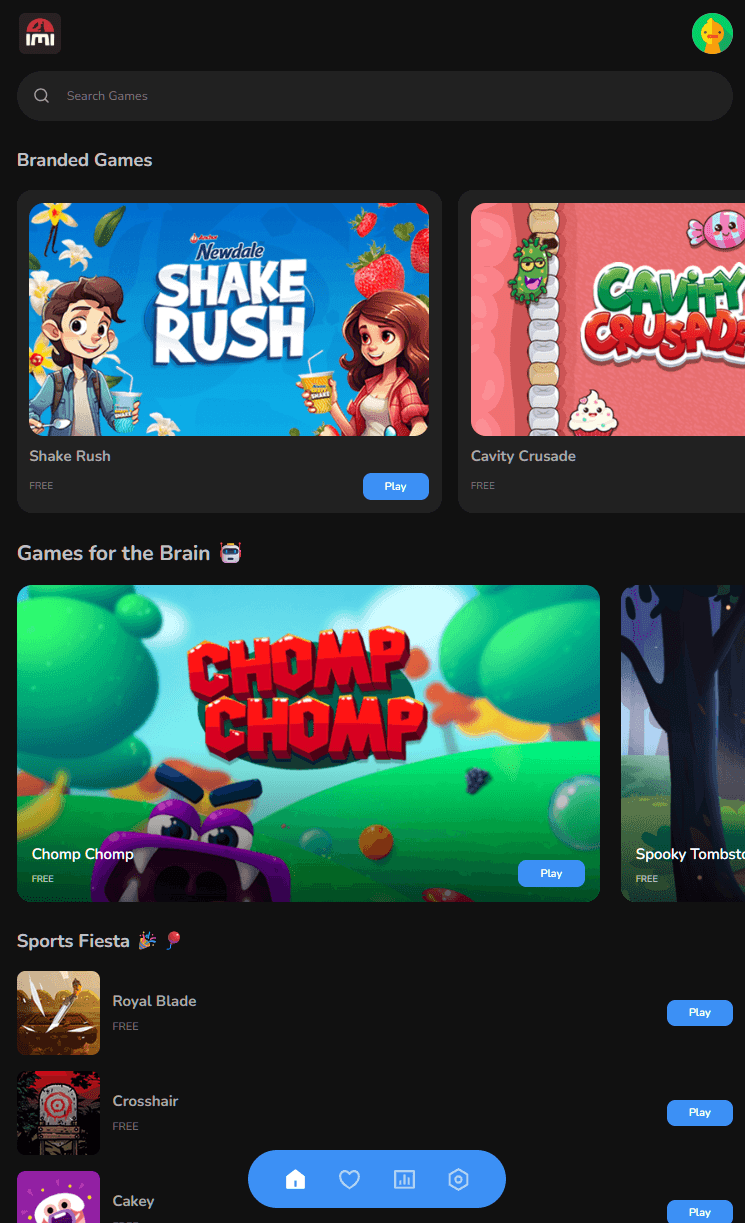
In addition to web optimization, I played a major role in adapting and converting these hyper-casual games across multiple platforms within the IMI ecosystem. This included preparing games for the IMI web experience and integrating and packaging selected titles into Flutter-based mobile applications. Several of these games were successfully optimized, deployed, and published to both the Google Play Store and Apple App Store, requiring additional platform-specific adjustments, performance tuning, responsiveness improvements, and compatibility testing for mobile devices.

The project required a strong understanding of PixiJS, JavaScript-based game architecture, cross-platform deployment workflows, API integration, responsive UI adaptation, debugging, and performance optimization. Through this work, I contributed to maintaining and scaling a large collection of interactive casual games while improving development efficiency, platform consistency, and overall user experience across both web and mobile gaming environments.