Stack the Blocks
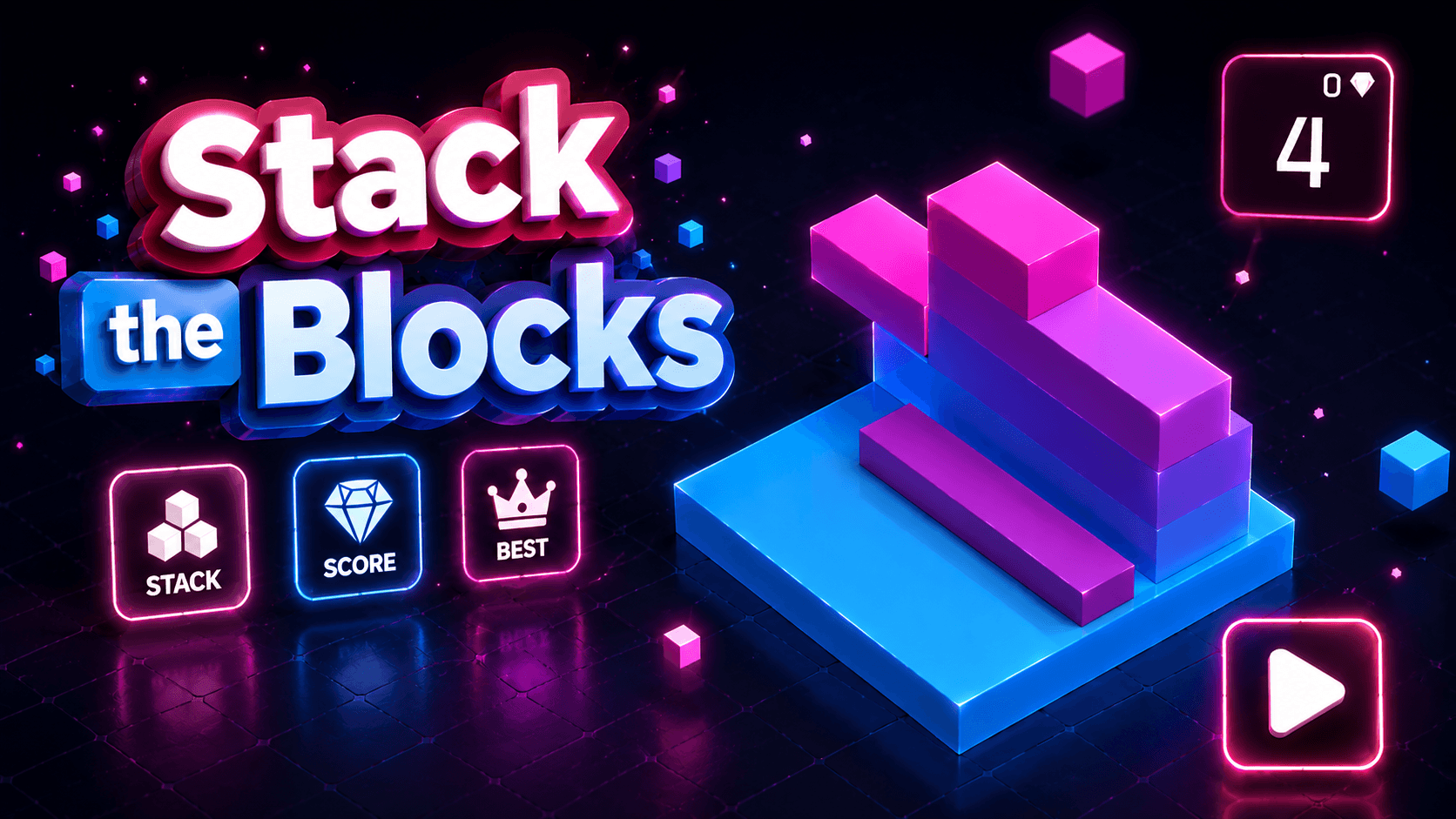
Developed Stack the Blocks, a hyper-casual educational game built with Unity3D during my internship at Creative Software, created as part of a larger gamified learning ecosystem delivered to multiple client platforms. The project combined simple yet addictive arcade gameplay mechanics with integrated educational interactions, creating an engaging experience that encouraged both player retention and learning participation within corporate and educational environments.
The core gameplay revolved around precision-based block stacking mechanics where moving blocks continuously slid across the screen and players had to tap at the correct moment to stack each block perfectly on top of the previous one. As the tower grew taller, the gameplay became increasingly challenging due to faster movement speeds and reduced placement margins, requiring improved timing and concentration from the player.
Similar to other educational games developed for the platform, the game integrated educational content directly into the progression system. During gameplay sessions, players encountered educational question prompts that needed to be answered correctly in order to continue progressing. This blended learning with arcade-style interaction, transforming traditional educational activities into a more interactive and competitive experience. Incorrect answers interrupted progression, reinforcing the connection between gameplay performance and educational engagement.
The game also featured an integrated leaderboard system connected to the broader educational platform, allowing players to compete with other users through score rankings and progression tracking. This competitive gamification element increased replayability and encouraged continued participation across the client platforms where the game was deployed.
I contributed throughout the complete game development lifecycle, including gameplay programming, block movement mechanics, stacking logic, educational content integration, leaderboard systems, UI implementation, testing, debugging, optimization, and deployment workflows. The project required close collaboration with development and QA teams to ensure smooth gameplay responsiveness, stable educational interactions, and reliable performance across supported environments.
The game was deployed using Unity WebGL technology, enabling browser-based accessibility without requiring installations, making it suitable for deployment across multiple client educational and corporate platforms. Significant attention was given to performance optimization, responsive controls, and compatibility across web browsers and devices to deliver a smooth and accessible gameplay experience.
This project demonstrated experience in hyper-casual game development, educational gamification systems, leaderboard integration, WebGL deployment, gameplay balancing, and collaborative production workflows while showcasing how Unity3D could be used to create engaging learning-focused digital entertainment experiences for enterprise and educational platforms.